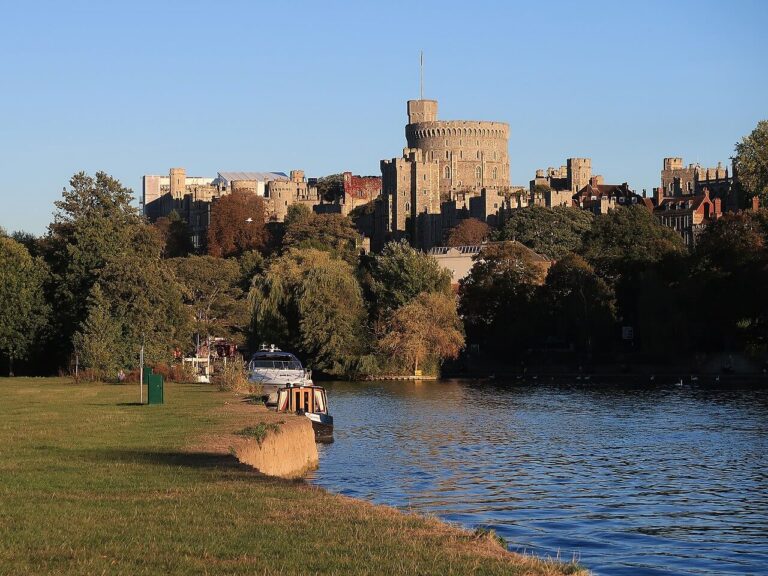
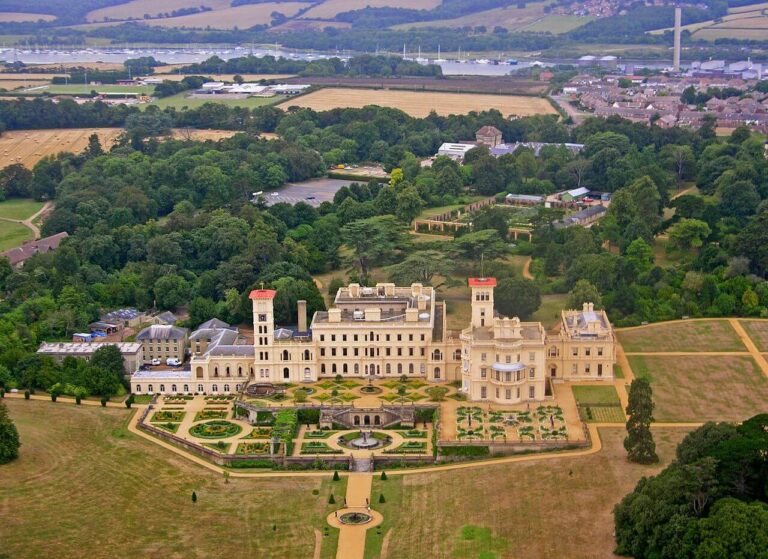
The best Castles, Palaces, & Stately Homes in Greater London
London isn’t just about busy streets, red buses, and shiny new skyscrapers, look a little closer and you’ll find a whole world of history hiding in plain sight.
Scattered across Greater London are castles, palaces, and grand old homes that have seen everything from royal dramas to lavish parties. Some were built to keep enemies out, others to impress important guests, and a few simply to show off serious wealth.
Some of these stately homes were built as country retreats, but with an ever-growing city of London, they are now part of the city and the Greater London area.
Visiting them is like stepping straight into the past, with hidden stories in every room and garden path. Whether you’re a history fan, an architecture lover, or just someone who enjoys a good royal tale.
These greater London castles, palaces, and stately homes bring to life the worlds of Queen Victoria, Henry VIII, Queen Anne, and Georgiana, the Duchess of Devonshire, to name a few.

Buckingham Palace
Buckingham Palace is the King’s official residence in London. The palace, located in the City of Westminster, London, is often the stage for grand state occasions.
At the core of the current palace is a large townhouse built for the Duke of Buckingham and Normanby in 1703. 60 years later, it was bought by King George III as a private residence for Queen Charlotte (in these years, it was known as The Queen’s House).
In the 19th century, the palace was extended by Johan Nash and Edward Blore, adding three wings around a central courtyard. When Queen Victoria came to the throne, it became the London residence of the British monarch.
During the Second World War, a German bomb hit the palace and destroyed the chapel. The King’s Gallery, exhibiting works of art from the Royal Collection, was built in its place.

Kensington Palace
Kensington Palace is a Royal residence in Kensington Gardens in London. Originally built as a two-story Jacobean mansion in the village of Kensington in 1605, the house was bought by King William III and Queen Mary II for the comfort of the asthmatic William.
The mansion was extended by Christopher Wren, who added a three-story pavilion at each corner to provide more space, and during the reign of Queen Anne, it was extended even further.
The gardens and the Orangery were also added during Queen Anne’s time. It was at Kensington Palace that Queen Anne last spoke to her friend Sarah, Duchess of Marlborough.
Many royals have lived at Kensington Palace; Queen Victoria was born at the palace, and Princess Margaret. Princess Diana, the Duke and Duchess of Cambridge all called Kensington Palace their home.
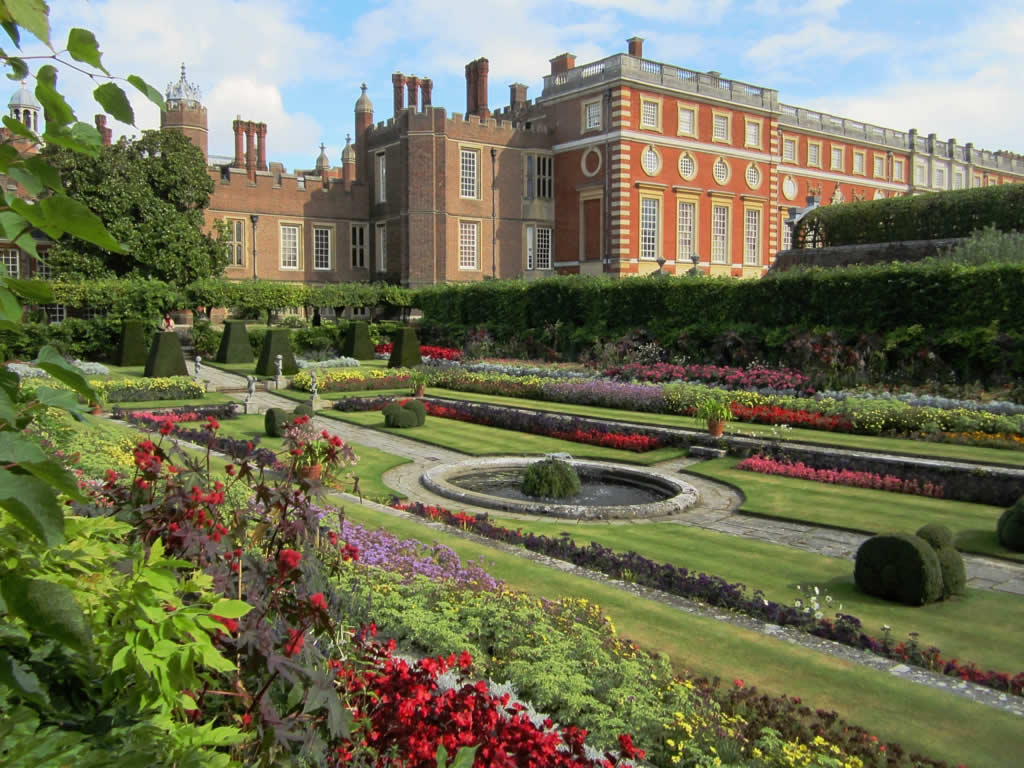
Hampton Court Palace
This Royal palace was built in the 16th century for Cardinal Wolsey. It was later given to Henry VIII, and it became one of his favorite palaces. Hampton Court Palace, together with St. James’ Palace, is the only surviving palace owned by Henry VIII.
King William III rebuilt the palace, so now the castle is in Tudor and Baroque style. The palace and grounds are open to visitors.

St. James’s Palace
St James’s Palace is the oldest royal palace in London. Built in the 1530s by the order of King Henry VIII, the palace was the second most important royal building (after the Palace of Whitehall) in the Tudor and Stuart times.
Parts of the palace, including the monarch’s private apartments, were destroyed in a fire in 1809 and have not been replaced. Some 17th-century interiors have been preserved, but the majority are from the 19th-century remodel.
Queen Victoria married Prince Albert at the Chapel of the St James’s Palace. Today, it is still a working palace, King Charles III was officially proclaimed King at the Palace, and also the London residence of Princess Anne. The palace opens on selected days for exclusive guided tours.

Tower of London
The Tower of London was founded in 1066 during the Norman Invasion. The White Tower, after which the entire castle is named, was built in 1078 by William the Conqueror.
Even though the Tower of London is now best known for being a prison, it was initially built as a Royal residence. The castle buildings are set within a defensive wall and a moat.
The tower is open for visitors. Visit the website for current opening hours.

Kew Palace
Kew Palace is a British royal palace in the grounds of Kew Gardens on the banks of the River Thames. Built as a large palace in the 17th century, today the Dutch House is the only surviving building.
Kew Palace was the home of King George III and Queen Charlotte and showcases a more personal and domestic life of the king and queen. The palace tells you more about George III and his mental illness, as well as other royal family members who lived here.
The grounds also feature Queen Charlotte’s Cottage. Both the palace and the cottage are open to the public.

Claremont House
Claremont House is an 18th-century Palladian manor house in Surrey. The first house on the estate was built by the Restoration playwright and architect of Blenheim Palace and Castle Howard, Sir John Vanbrugh.
The current house dates from 1774, after Robert Clive, 1st Baron Clive, and founder of Britain’s Indian Empire, bought the estate and demolished the old house. He commissioned Capability Brown (more known for his landscape architecture) to build the current Palladian mansion.
In 1816, the house was bought as a wedding present for the Prince Regent’s daughter, Princess Charlotte, and her husband, Prince Leopold of Saxe-Coburg. Queen Victoria was a frequent visitor to the house as a child and as an adult, as Leopold was her uncle.
Queen Victoria lent the house to the exiled French King and Queen after the Revolutions of 1848.
Since the 1930s, the house has become a school, but the grounds, showcasing contributions by great landscape designers like Capability Brown, Sir John Vanbrugh, and William Kent, were acquired by the National Trust and are open to the public.

Marlborough House
Marlborough House is an early 18th-century mansion on The Mall in St. James’s, City of Westminster, in London. The house was designed by Christopher Wren and built for Sarah Churchill, Duchess of Marlborough, the favorite and confidante of Queen Anne (as depicted in the movie The Favourite with Oliva Colman as Queen Anne and Rachel Weisz as Sarah Churchill.
In the 19th and the first half of the 20th centuries, the house became a Royal residence. It was expanded for the future King Edward VII, and was the site of many social events during his time.
Queen Elizabeth II leased the house to the Commonwealth Secretariat in 1965, and it continues to be leased to the Commonwealth Secretariat to this day. The house is usually open to the public for Open House Weekend and can be toured by groups with a prior arrangement.

Clarence House
Clarence House is a royal residence on The Mall in London. The house was built in the early 19th century for the royal Duke of Clarence (the future King William IV). Currently it is the London residence of King Charles III and Queen Camilla.
During the Second World War, the house was severely damaged, and little remains of the original John Nash structure.
The house is usually open to visitors for one month in the Summer.
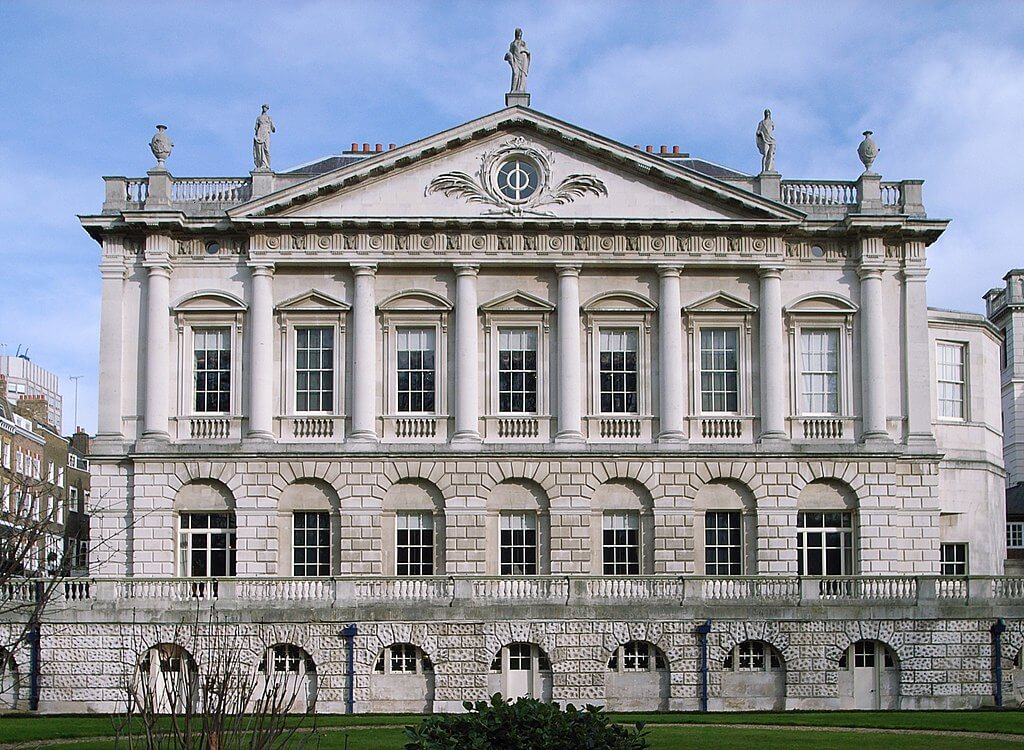
Spencer House
Spencer House in London is one of the first Neoclassical buildings in London. The townhouse was built in the late 18th century for John Spencer (who would become the first Earl Spencer). The house is still owned by the Earls Spencer (currently the 9th Earl, who is the brother of Princess Diana).
However, the house is leased out to Jacob Rothschild, 4th Baron Rothschild. He restored the state rooms and garden to their original appearance. It is one of the few aristocratic houses left in London.
Spencer House opening times: the house and garden can be visited through a pre-booked tour. Visit the website to book your house tour.

Queen’s House
Queen’s House is a former Royal residence in Greenwich. It is one of the most important British architectural buildings since it was the first consciously classical building in the country.
The house was hardly used as a Royal Palace, and since its construction, it has been part of the Royal Hospital School and as part of the Old Royal Naval College.
Queen’s House is now a museum with an art collection ranging from Rembrandt to Gainsborough. And a focus on Tudor Royal history.

Wrotham Park
Wrotham Park is one of the largest country houses near London. The house was built in 1754 in a neo-Palladian style by Isaac Ware for Admiral John Byng (4th son of Admiral Sir George Byng).
The estate north of London is packed with important artworks, including a Sargent, a Titian, and a Van Dyck. The home is still used as the private residence of the Byng family, which makes it feel lived-in and perfect for the Wylers. The house is also used as a filming location for Bridgerton, The Crown, The Diplomat, and Sense & Sensibility.

Ham House
Ham House is a rare example of a 17th-century country house in England. The house sits on the banks of the River Thames in Richmond. The house is the creation of the Duchess of Lauderdale and her husband. They transformed Ham House into one of the greatest Stuart houses in England.
Ham House features a world-class collection of paintings, furniture, and textiles over 400 years old. Formal, restored 17th-century gardens surround the historic house.
Since the mid-20th century, Ham House has been a National Trust property. The house is often used as a film location. Besides Sense and Sensibility, The Young Victoria, A Little Chaos, Anna Karenina, Rebecca, and Belgravia are filmed at Ham House.

Strawberry Hill House
Strawberry Hill House was Horace Walpole’s summer residence. He designed his version of “a little Gothic castle” with pinnacles, battlements, and a round tower. At the “castle” (technically it’s not a castle), he entertained prominent guests like Royalty, English aristocracy, and foreign ambassadors.
Even in Walpole’s time, the castle was a tourist destination. Four visitors (no children!) were allowed in the house a day. They got a tour from his housekeeper.
In 1842, the house was stripped of almost all its contents because George Waldegrave spent all of the family’s fortune. In 1856, George’s wife, Lady Frances Waldegrave, saved Strawberry Hill. She expanded and embellished the castle, being faithful to Horace’s vision.

Pitzhanger Manor
Pitzhanger Manor is a grand country house in what is now Walpole Park, to the west of London. The house was designed by the neoclassical architect Sir John Soane as his own residence. The house was not only built as a family home, but also as a place for entertaining and showcasing his architectural skills and his collection of art.
Only 6 years after its completion, the house was sold as John’s wife didn’t like living in the country, and he had fallen out with his two sons.
In the early 21st century, the house was restored to Sir John Soane’s architectural vision. In 2019, the house opened as the Pitzhanger Manor & Gallery.

Gunnersbury Park
Gunnersbury Park in London comprises two Georgian manor houses acquired by Leopold de Rothschild in the 19th century. He also added the woodland gardens with Asian plants and an early example of a Japanese garden in England.
Gunnersbury House now houses a museum with permanent and temporary exhibitions ranging from archaeological collections to fashion and social history.
Gunnersbury Park opening times: the museum is open Tuesday-Sunday. The park is open daily. Visit the website for more information.
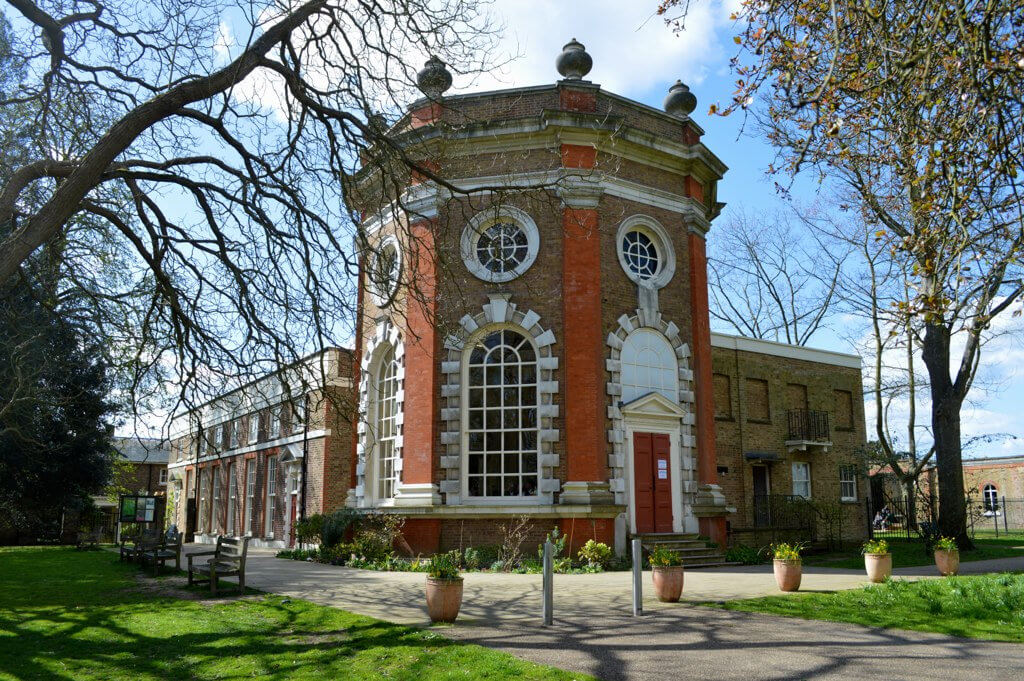
Orleans House Gallery
Orlean House was a villa designed in 1710 by architect John James for politician James Johnston. It is named Orleans after the Duc d’Orléans, who stayed here in the early 19th century.
The house was in Palladian styl,e but there is a Baroque octagonal room designed by James Gibbs. Most of the house has been demolished. But the Baroque octagonal room has been preserved.
This Baroque room, with its service wing and a converted stable block, is now the Orleans House Art Gallery.

Apsley House
Apsley House is the London townhouse of the Dukes of Wellington, located at the south-east corner of Hyde Park. The house was designed by Robert Adam for Lord Apsley in the 1770s, and it was later renovated by Benjamin Dean Wyatt.
Currently, the house is still the private residence of the Duke of Wellington, but half of the house is run by English Heritage as the Wellington Museum, showcasing a large collection of paintings, artworks, and memorabilia of the 1st Duke.

Osterley Park
Osterley Park is a Georgian country estate in West London. The Georgian manor was originally built in the 1570s, but Robert Adam remodeled it in the 18th century. Today, the house looks as it would have done in the 1780s, and it is considered one of the finest and most complete houses designed by Robert Adam.
The estate is owned by the National Trust, and it is open to visitors.

Chiswick House and Gardens
Chiswick House is a Neo-Palladian villa in the Chiswick district of London. The house was designed and built by Richard Boyle, 3rd Earl of Burlington, in 1729. The estate occupies more than 65 acres and features one of the earliest examples of the English landscape garden, designed by William Kent.
In the 18th century, the house was passed to William Cavendish, 5th Duke of Devonshire. His wife, Georgiana Spencer, a socialite and political organizer, used the house as a retreat and as a Whig stronghold.
In the 19th century, the house fell into decline, and it was damaged during the Second World War. Today, the restored home and gardens are owned by English Heritage.

Ranger’s House
Ranger’s House is a Palladian-style Georgian mansion in London. The manor house is now a museum that houses the Wernher Collection.
This is a world-class art collection amassed by the 19th-century businessman, Sir Julius Wernher. The collection consists of 700 works of art, including medieval sculptures, Renaissance paintings, and Old Dutch Masters.

Forty Hall Estate
Forty Hall Estate is an early 17th-century manor house in North London. The house is located on the top of Forty Hill, on the site of the former Tudor Elsyng Palace, which was discovered in the 1960s.
The hall is now a museum, telling the story of the house and its estate throughout the ages, as well as the life of Sir Nicholar Rainton (Lord Mayor of London who probably built the house).

Eastbury Manor House
Eastbury Manor House is an Elizabethan manor house in Greater London. The house was built by Clement Sisley, a wealthy merchant. The exterior of the house is still Elizabethan, but indoors, the rooms were demolished and changed in later centuries.
The house was in bad shape when the National Trust bought it in 1918, but since then it has been restored and is now a historic house museum with special exhibitions set in tranquil Tudor-inspired gardens. Visit the website for opening times.

Kenwood House and Garden
Kenwood House is a stately home in Hampstead, on the northern boundary of Hampstead Heath. The house was built in the 17th century, but remodeled a century later by Robert Adam for William Murray, 1st Earl of Mansfield. It was the home of the Mansfield until the 20th century, when it was bought by Edward Guinness, 1st Earl of Iveagh.
Kenwood House contains a great number of historic paintings, including Old Master paintings, such as works by Johannes Vermeer, Rembrandt, and Frans Hals. The house and grounds (112 acres of parkland designed by Humphry Repton) are open to visitors.

Burgh House
Burgh House is an early 18th-century Queen Anne and Georgian House in the heart of Hampstead Village. The house remained a private residence until the mid-20th century.
Today, it is a dynamic historic house, museum, art gallery, and event venue. It features the world’s most extensive collection of Helen Allingham works.

Fenton House and Garden
Fenton House is a merchant’s house in Hampstead that was built in the late 17th century. The house features the Benton Fletcher collection of early keyboard instruments, as well as a large collection of paintings and Georgian furniture. The house features portraits of King William IV and his mistress, Dorothea Jordan, and their sons.
The house was bequeathed to the National Trust by its last owner and resident, Lady Binning.

Hall Place and Gardens
This Tudor mansion in South East London was built in 1537 for Sir John Champneys. The stately home became the property of the Dashwood family in the 1700s.
During WWII it was an intercept station for the US Army. Now the Tudor mansion is restored to its Tudor & 17th century design. The gardens include a Butterfly House and Plant Centre.

Red House
Red House is an Arts and Crafts building in south-east London, co-designed by architect Philip Webb and designer William Morris, as a family home for Morris.
The house gives a nice insight into the lives of William and Janey and the establishment of Morris & Co. It features original features and furniture by William Morris and Philip Webb, as well as stained glass and paintings by Burne-Jones.
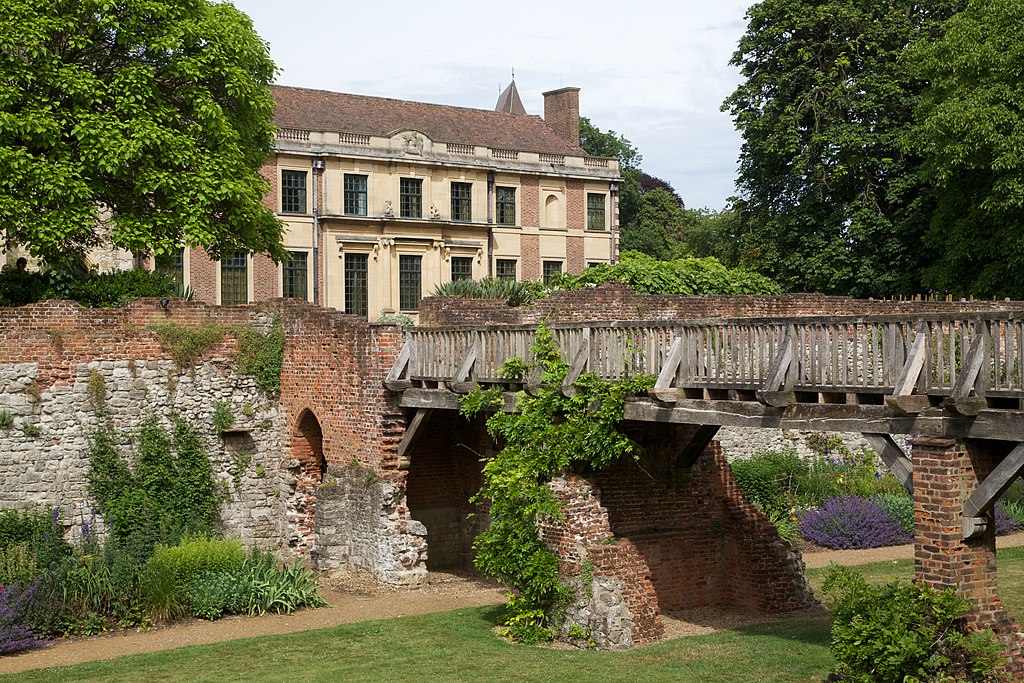
Eltham Palace
Eltham Palace is a unique manor house where Medieval, Tudor, and Art Deco blend together. It was a Royal residence during the Tudor period, and future King Henry VIII grew up at Eltham Palace. In the 1930s, millionaires Stephen and Virginia Courtauld transformed the house. Therefore, you can now see a unique blend of historic architecture with 1930s design.
The house and gardens are open for visitors. For actual opening times, visit the English Heritage website.